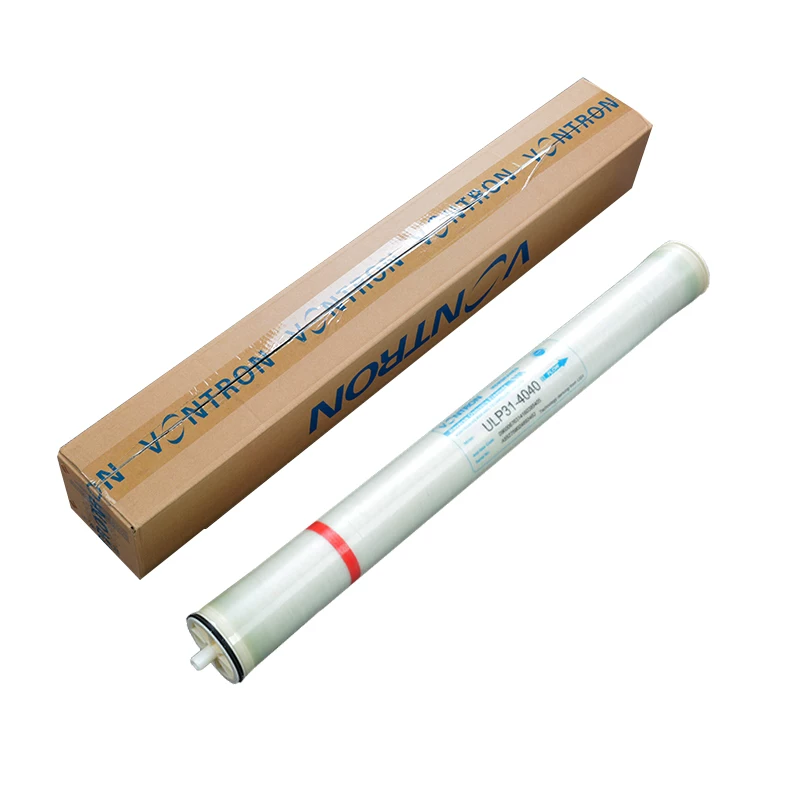
RO Membrane 4040 vs 8040: Which One Do You Need?
If you're designing or upgrading an industrial reverse osmosis system, one of the first decisions you'll face is choosing between a 4040 and an 8040 RO membrane element. On the surface, the difference looks like a few inches โ 4-inch diameter vs 8-inch diameter, both 40 inches long. But that difference in diameter translates into vastly different flow rates, system footprints, and total cost of ownership.
Picking the right size matters. An undersized system struggles to meet demand. An oversized one wastes capital on unnecessary hardware. This guide breaks down the specs, trade-offs, and real-world applications for both formats so you can make the right call for your project.
What Are the Specs of RO 4040 Membranes?
The 4040 membrane โ named for its 4-inch diameter and 40-inch length โ is the workhorse of smaller-scale RO systems. Its compact form factor makes it popular in commercial RO units, light industrial applications, and pilot testing rigs.
| Spec | 4040 (4") |
|---|---|
| Diameter | 4 inches (10 cm) |
| Length | 40 inches (101 cm) |
| Membrane area | ~85โ90 sq ft (7.9โ8.4 mยฒ) |
| Permeate flow | 2,500โ3,000 GPD (9โ11 mยณ/day) |
| Salt rejection | 99โ99.5% |
| Operating pressure | 150โ225 psi (1.0โ1.6 MPa) |
| Connector | 1.5-inch |
A single 4040 element produces roughly 2,500โ3,000 gallons of permeate per day under standard test conditions. That's enough for small-scale brackish water treatment, a medium-size commercial building, or a light industrial process line. The lower membrane area means fewer square feet of active filtration per vessel, but also means lighter elements that are easier to handle during maintenance.
Typical feed water quality for 4040 elements ranges from tap water to moderate brackish water (TDS up to ~5,000 ppm). Under 150โ225 psi, you'll see reliable 99%+ salt rejection, with premium membrane variants hitting 99.5%.
One practical advantage: 4040 vessels weigh less and are smaller in diameter, so installation in confined mechanical rooms or skid-mounted packages is simpler. Replacement elements are also widely stocked by distributors.
What Are the Specs of RO 8040 Membranes?
The 8040 membrane โ 8-inch diameter, 40-inch length โ is the industry standard for medium-to-large industrial RO systems. Its substantially larger membrane area makes it the go-to choice when you need high throughput per vessel.
| Spec | 8040 (8") |
|---|---|
| Diameter | 8 inches (20 cm) |
| Length | 40 inches (101 cm) |
| Membrane area | ~360โ400 sq ft (33โ37 mยฒ) |
| Permeate flow | 8,000โ12,000 GPD (30โ45 mยณ/day) |
| Salt rejection | 99.5โ99.7% |
| Operating pressure | 150โ225 psi (1.0โ1.6 MPa) |
| Connector | 2-inch |
With roughly 4 times the membrane area of a 4040, an 8040 element delivers 8,000โ12,000 GPD โ 3โ4ร the flow from a single element. The added surface area also pushes salt rejection margins higher, with many 8040 elements rated at 99.5โ99.7%.
Industrial RO systems running on brackish water or municipal feed water typically use 8040 elements arranged in pressure vessels holding 4, 6, or 8 elements in series. A single vessel with six 8040 elements can produce 50,000โ70,000 GPD. Multiply that across a multi-vessel array, and you can reach hundreds of thousands of gallons per day.
The larger diameter does mean you need more substantial pressure vessels โ typically 8-inch FRP or stainless steel housings with 2-inch connections. Element handling also requires a bit more care (each element weighs 30โ35 lb vs 12โ15 lb for 4040).
Comparison Table: 4040 vs 8040
| Spec | 4040 (4") | 8040 (8") |
|---|---|---|
| Diameter | 4 in (10 cm) | 8 in (20 cm) |
| Membrane Area | ~87 sq ft | ~370 sq ft |
| Permeate Flow | 2,500โ3,000 GPD | 9,000โ12,000 GPD |
| Salt Rejection | 99โ99.5% | 99.5โ99.7% |
| Price (per element) | $80โ150 | $200โ400 |
| Operating Pressure | 150โ225 psi | 150โ225 psi |
| Connector | 1.5" | 2" |
| Weight (dry) | ~12โ15 lb | ~30โ35 lb |
| Active Area Ratio | 1ร (baseline) | ~4.3ร |
The pricing gap is important to note. An 8040 costs 2โ3ร what a 4040 costs, but delivers 3โ4ร the flow. When you look at cost per gallon of permeate, the 8040 almost always wins at scale.
When Should You Choose 4040?
The 4040 format excels in applications where total system size is small and simplicity matters more than per-gallon optimization.
Best fits for 4040:
- Systems up to ~10,000 GPD total capacity. At this scale, a 4040-based system with 3โ4 elements keeps vessel count simple and capital outlay low.
- Commercial RO systems. Restaurants, hotels, hospitals, and small manufacturing facilities typically don't need the massive throughput of 8-inch elements.
- Space-constrained installations. The 4-inch diameter vessels fit into mechanical rooms, skid packages, and trailer-mounted units where every inch matters.
- Pilot testing and R&D. Running a 4040 element in a single-vessel skid gives you representative performance data before scaling up to a full 8040 array.
- Non-standard arrays. If your design requires 2:1 or 3:2 membrane staging in a small system, 4040 elements offer more flexibility without over-provisioning capacity.
There's also a lower barrier to entry on the end-user side. Maintenance staff familiar with 4-inch vessels can easily swap elements without lifting equipment, and replacement 4040 elements are available off the shelf from most water treatment suppliers.
When Should You Choose 8040?
Once your target production exceeds about 10,000 GPD, the economics shift decisively toward 8040 elements. The vast majority of industrial RO plants use 8-inch elements โ it's the established standard.
Best fits for 8040:
- Industrial systems from 10,000 to 500,000+ GPD. A typical 100,000 GPD plant uses 12โ18 8040 elements across 2โ3 vessels. Achieving that with 4040 elements would require 40โ60+ elements across many more vessels.
- Lower cost per gallon of product water. Because 8040 elements pack more membrane area per dollar of hardware, your $/GPD capital cost drops significantly.
- Higher salt rejection requirements. If your feed is challenging (high TDS, tight product specs), the additional membrane area and tighter rejection of 8040 elements give you an extra margin of safety.
- Municipal and large industrial RO plants. These facilities overwhelmingly specify 8-inch elements โ meaning spare parts, service expertise, and replacement membranes are widely available.
- Systems where footprint matters less. If you have dedicated pump room or outdoor skid space, the larger vessels are easily accommodated and the per-element production density is unmatched.
For plants above 50,000 GPD, the 8040 choice is essentially automatic. The vessel array is more compact, piping is simpler, and the total number of element change-outs per year is lower โ all of which reduce operational complexity.
Which Has Better Value?
Let's do the math. An 8040 element costs roughly 2โ3ร a 4040 element, but delivers 3โ4ร the permeate flow. On a per-gallon basis, the 8040 almost always wins:
4040: $80โ$150 รท 2,500โ3,000 GPD โ $0.027โ$0.060 per GPD of capacity
8040: $200โ$400 รท 9,000โ12,000 GPD โ $0.017โ$0.044 per GPD of capacity
The 8040 carries a lower per-gallon membrane cost, fewer vessels, fewer interconnects, simpler piping, and fewer O-rings to maintain. At flow rates above 5,000 GPD, the 8040 is almost always the more cost-effective choice.
That said, value isn't only about cost per gallon. For a small commercial system producing 3,000 GPD, running a single 4040 vessel is simple, compact, and inexpensive. Putting in an 8-inch vessel at that scale would be overkill โ you'd have excess capacity, a larger footprint, and unnecessary complexity.
The rule of thumb: If your system needs less than 5,000 GPD, go with 4040. If it needs more, the 8040 gives you better economics, higher rejection, and a clear upgrade path for future expansion. There's a reason the 8040 dominates industrial RO โ and it's not just about size.
Still unsure which format fits your project? Contact the Jingze Water team for a free system sizing consultation. We'll help you match membrane configuration to your feed water analysis, target flow, and budget.