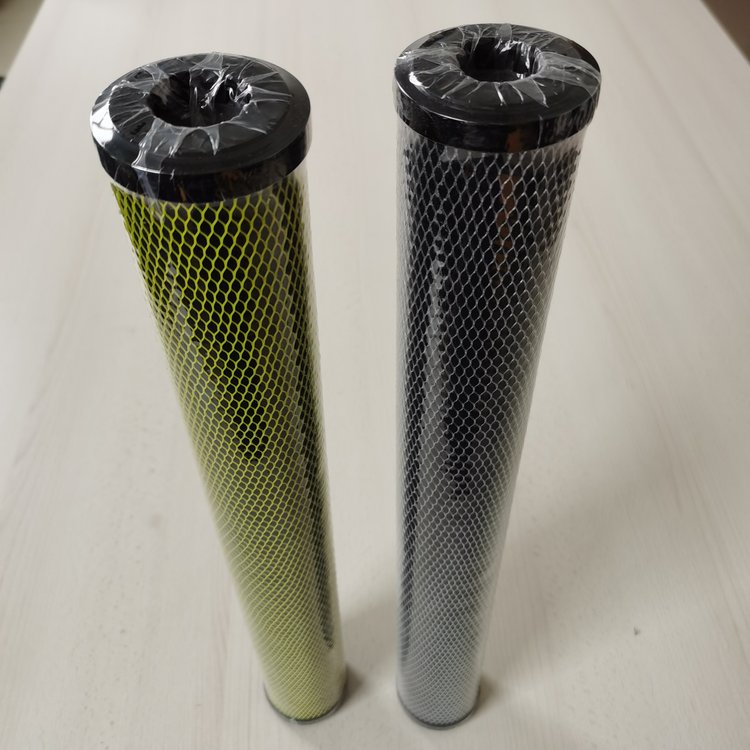
Premium coconut shell activated carbon - Model: JZ-CB Series
What Applications Need Carbon Block Cartridges?
How to Select the Right Micron Rating?
Why Source Carbon Block from a Chinese Factory?
Stop Replacing Filters So Often — Switch to a Better Solution
The Problem
Chlorine, bad taste, and VOCs in drinking water damage RO membranes and affect product quality. Standard sediment filters don't remove chemical contaminants.
Our Solution
Coconut shell carbon block cartridges with high-density activated carbon. Removes 97%+ chlorine, taste, odor, and VOCs. NSF-certified materials. Acts as both mechanical filter and chemical adsorber.
Best For
Drinking water systems, RO pretreatment for chlorine-sensitive membranes, food & beverage process water, commercial water dispensers.
Results
Hospitality clients report 50% longer RO membrane life. Brewery achieved consistent water quality with 99% chlorine reduction.
Length
10" (250mm) / 20" (500mm)
OD Options
2.5" Slim Line / 4.5" Big Blue
Micron Ratings
5μm, 10μm (nominal)
Carbon Type
Coconut Shell GAC, Iodine Value >1000 mg/g
Chlorine Reduction (at rated flow)
>97%
VOC Reduction
>95% (per NSF 53)
Material
PP binder + Activated Carbon
Max Temp
52 °C (125 °F)
Max DP
2.0 bar (30 psi)
End Caps
DOE / SOE-222 / SOE-226 (slim); DOE / SOE (Big Blue)
Applications
Drinking WaterChlorine ReductionTaste & OdorRO Pre-TreatmentVOC ReductionBeverage Production
Carbon block filter cartridge is made from finely ground coconut shell activated carbon compressed into a solid block. It effectively removes chlorine, taste, odor, and volatile organic compounds (VOCs) from water. The microporous structure provides both mechanical filtration and adsorption, making it ideal for drinking water systems, RO pre-treatment, and food and beverage applications.
Key Features
Superior Adsorption -- Coconut shell carbon with high iodine value
CTO, GAC and Carbon Block — What the Names Actually Mean
These three labels get used interchangeably, and they do not mean the same thing. Knowing which one you need saves a wasted order.
Term
What it stands for
What it is
Where it fits
CTO
Chlorine, Taste and Odour reduction
A performance claim, not a form factor. A CTO-rated cartridge is one certified to reduce free chlorine, taste and odour — it can be carbon block or granular.
Drinking water, bottled water, beverage production
GAC
Granular Activated Carbon
Loose carbon granules held in a housing or a cartridge body. High surface area and good adsorption, but the granules can channel and the fines can migrate.
Bulk dechlorination, pre-treatment where turbidity is low
Carbon block
—
Activated carbon bonded into a solid porous block under pressure. No channelling, consistent contact time, and it also acts as a fine mechanical filter.
Polishing, membrane protection, drinking water
CTO carbon block
Combination
A carbon block cartridge certified for chlorine, taste and odour reduction — the most common specification in drinking water and beverage work.
The usual choice where both adsorption and particulate removal are wanted
Our carbon block cartridges are formed from coconut shell activated carbon with an iodine value above 1000 mg/g, bonded with a polypropylene binder. Published performance is more than 97 percent chlorine reduction at rated flow and more than 95 percent VOC reduction to NSF 53. The same base material is available as a granular fill for customers who want GAC, and both can be supplied loose or in cartridge form.
Carbon Block vs GAC — How to Choose
Consideration
Carbon block
Granular activated carbon (GAC)
Contact consistency
Uniform — no channelling
Can channel as the bed settles
Particulate removal
Yes, 5-10 micron nominal as well as adsorption
Adsorption only; needs a pre-filter
Fines
None
Carbon fines can migrate downstream
Change-out
Cartridge, simple
Bulk media change, more labour
Cost per litre treated
Higher per cartridge, lower total cost where filtration is also needed
Lower media cost in bulk, better for very large volumes
Typical duty
Drinking water, beverage, membrane protection
Bulk dechlorination, high-volume pre-treatment
Why Carbon Matters Before an RO Membrane
Free chlorine destroys polyamide RO membranes. It does not do it in one pass — it oxidises the membrane surface gradually, and the first symptom is a slow fall in salt rejection that gets blamed on the membrane rather than on the pre-treatment.
That is the entire reason a carbon stage sits between the sediment filter and the membrane. If you are running an RO system without carbon pre-treatment and your rejection is drifting, check the free chlorine at the membrane inlet before you buy new elements.